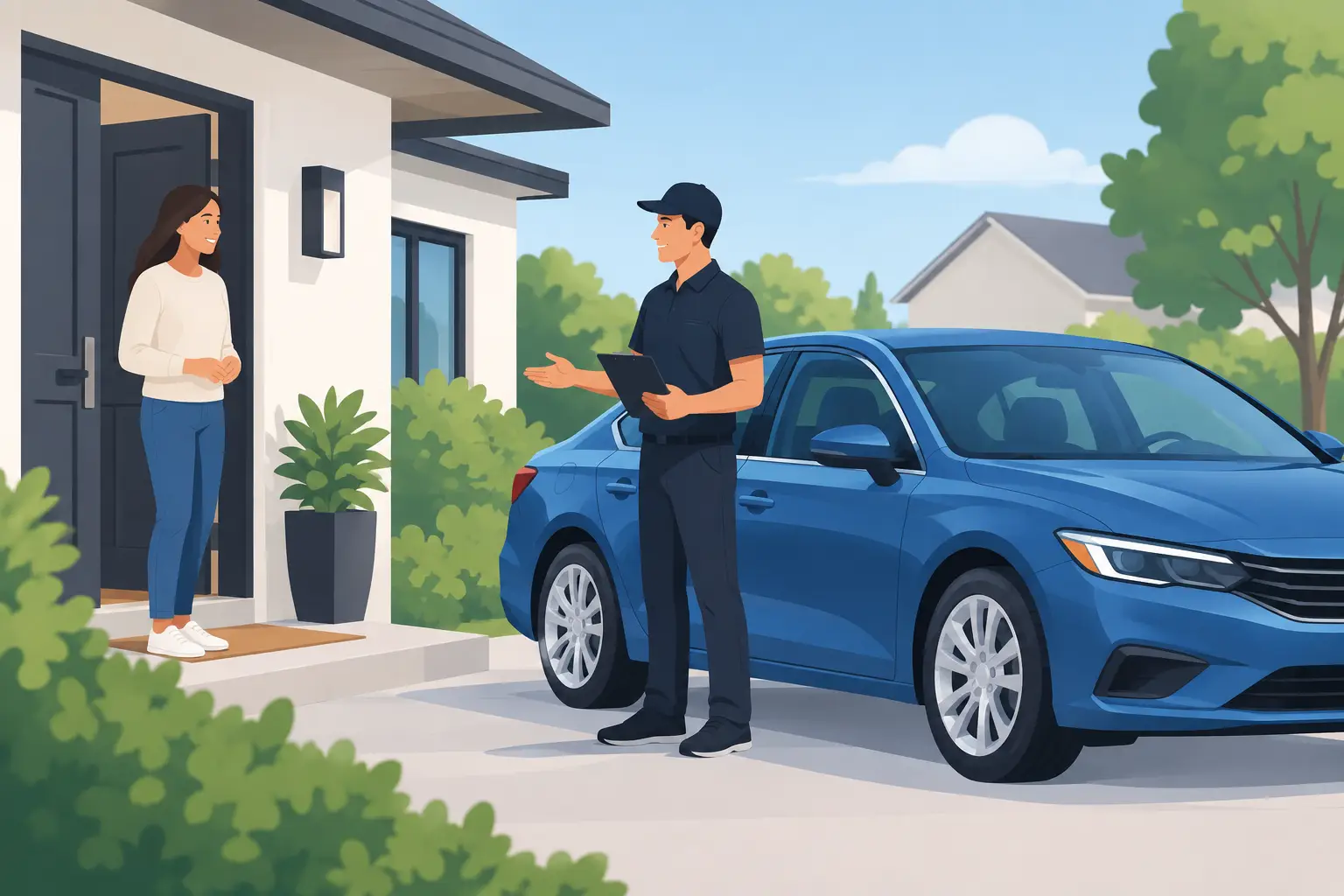

Your car may only be travelling a few miles to the garage, but the question is the same whether it is a routine service, MOT repair or dealership appointment: who is responsible if something goes wrong on the way? Vehicle transport insurance is there to give you clarity and peace of mind when someone else is collecting, driving and returning your vehicle.
For busy households, that reassurance matters. Handing over the keys should save you a day of rearranging work, childcare and lifts - not create a new worry. The right collection and delivery service makes the process straightforward, with clear cover, a professional driver and a record of your vehicle’s condition from the outset.
Why vehicle transport insurance matters
When you drive your own car to a garage, you are relying on your own motor insurance. When a collection driver takes it there for you, the insurance position changes. A reputable provider should hold appropriate cover for the work it carries out and be able to explain, in plain English, what happens if your vehicle is damaged while in its care.
This is not simply a box-ticking exercise. Small damage can be costly and inconvenient to put right, particularly on newer vehicles, cars with specialist paintwork or vehicles that are already booked in for important work. Clear insurance arrangements mean there is a defined process should an incident occur, rather than uncertainty over whether your own policy, the garage or the driver is responsible.
It also helps distinguish a professional service from an informal favour. A friend may be willing to take your car to the dealership, but they may not be insured to drive it. Even where they are, a claim could affect their policy or yours. Professional collection is designed to remove that grey area.
What should vehicle transport insurance cover?
The exact policy wording will vary between providers, so there is no single level of cover that suits every journey. However, before booking, you should expect a clear answer on the essentials: damage to your car while it is being collected, driven to the garage or dealership, and returned; third-party liability while it is on the road; and the process for reporting and resolving a problem.
A provider may refer to road risk insurance, motor trade insurance or vehicle-in-care cover. The terminology matters less than the practical answer. Ask whether the driver is insured to drive your specific vehicle for collection and delivery, and whether the service’s policy responds if damage happens while the vehicle is under its control.
Do not assume your comprehensive motor policy automatically covers every situation. Some policies allow other people to drive with permission, while others restrict cover or only provide third-party protection. Business use, paid collection services and vehicles being moved as part of a commercial arrangement can introduce further conditions. Check your own policy if you are unsure, but do not rely on it as a substitute for the transport provider’s cover.
The value of a condition check
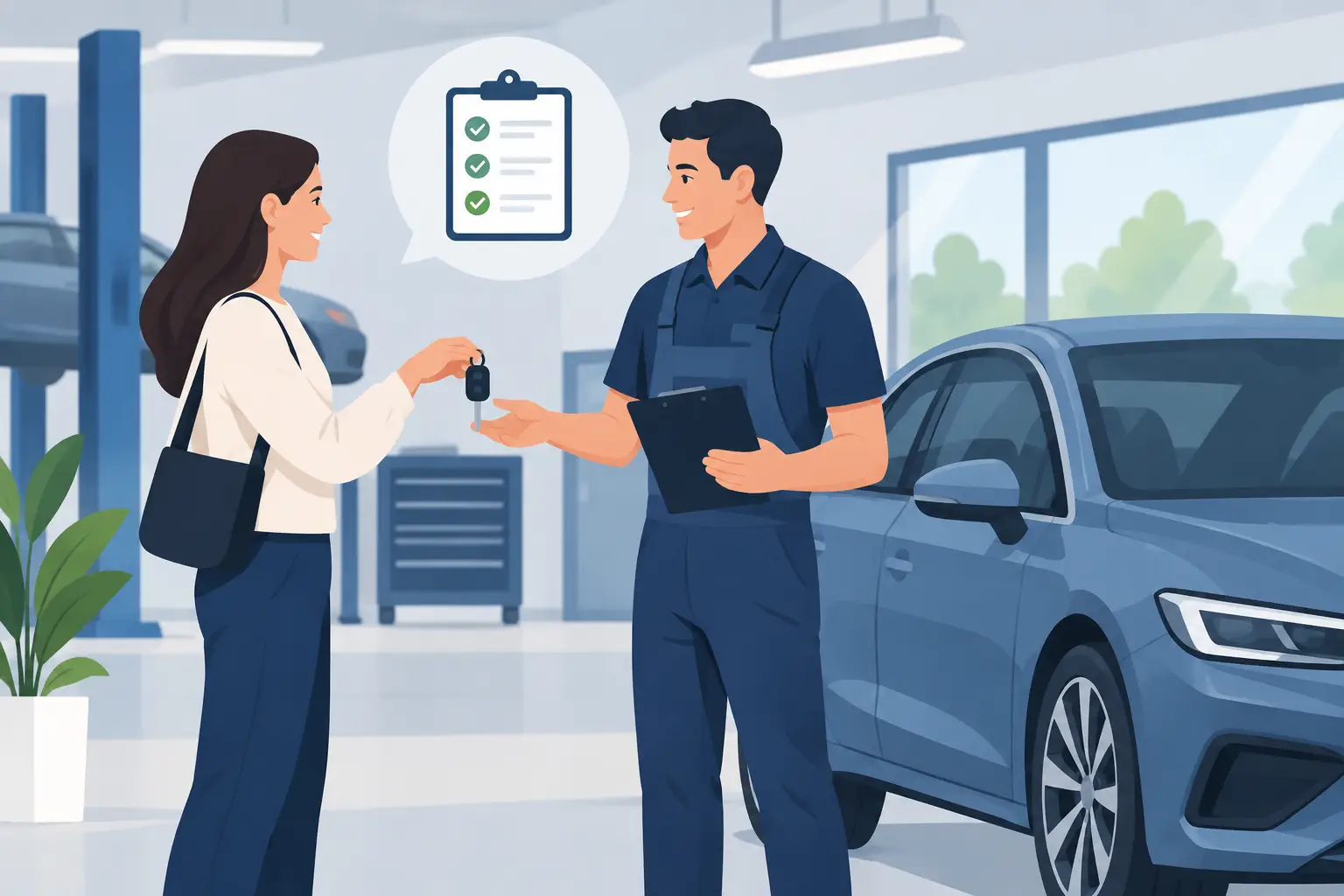
Insurance works best alongside a sensible handover process. Before collection, take a few clear photographs of the car from all sides, including wheels, windscreens and any existing marks. Photograph the mileage and fuel level too. It takes minutes and gives both you and the driver a shared starting point.
A professional collection service should also document the vehicle’s condition. That does not mean every tiny age-related mark becomes a dispute. It means there is a fair, practical record if a new issue is noticed later. If your car has a warning light, a known mechanical fault, low tyre pressure or damage that affects how it can be driven, mention it before the appointment.
Questions worth asking before you book
You do not need to become an insurance expert to make a confident choice. The best questions are simple and direct. Is the vehicle insured while your driver is collecting and returning it? What types of damage are covered? Is there an excess? How do I report an issue, and how quickly will you respond?
It is also sensible to ask who will be driving your car. A service should be able to confirm that its drivers are appropriately licensed, vetted and insured. For many customers, tracking adds another layer of reassurance. Knowing where your vehicle is and when it has arrived removes the need for repeated calls or guesswork during a busy working day.
If your vehicle is particularly valuable, modified, classic or unusual, raise this before you confirm the booking. Standard cover may have limits, exclusions or valuation requirements. The right answer may be that additional arrangements are needed, and it is far better to know that in advance than after a problem.
Understand the exclusions, not just the headline
Insurance is valuable, but it is not a promise that every situation is covered without conditions. Most policies have exclusions, and transparent providers will not hide them behind vague language.
For example, cover may not apply if a vehicle is unsafe or illegal to drive, if a fault has not been disclosed, or if personal belongings are left inside. Damage caused by pre-existing mechanical issues is also different from accidental damage during transport. If a car breaks down because of an existing fault, the insurance position may depend on the circumstances and the policy terms.
There may also be a limit on the value of a claim. Ask how the vehicle is valued if it is damaged, particularly if it has optional extras, cherished features or modifications that are not obvious from its registration. Keep receipts and records for significant upgrades where possible.
The aim is not to expect the worst. It is to book with your eyes open. A provider that explains the boundaries of its cover clearly is usually a better choice than one that simply says, “fully insured” without detail.
Your own insurance still has a role
Even when a collection service has suitable insurance, keep your own motor policy active and tell your insurer about any material changes that may affect cover. You should also ensure the vehicle is taxed, roadworthy and has a valid MOT where required for the journey.
There is one practical exception worth understanding. If your car is booked in because it is not safe to drive, ordinary collection by road may not be appropriate. Be honest about the fault when booking. A responsible provider can then advise on whether the journey can go ahead safely or whether different arrangements are needed.
Before handing over the keys, remove valuables, confidential paperwork, spare bank cards, house keys and anything you would not want left in the vehicle. This protects your privacy and avoids confusion over personal belongings, which are often outside vehicle transport insurance cover.
A smoother handover starts with clear information
The most reassuring collection experience is usually the least complicated one. Confirm the pickup address, contact number, garage or dealership details, booking reference and any access instructions. Let the provider know about parking restrictions, keyless entry, automatic gearboxes, charging requirements for electric vehicles or any dashboard warnings.
At SortMyCar, the focus is on taking the disruption out of garage and dealership visits while keeping customers informed. Secure collection, driver tracking and appropriate insurance cover help turn an awkward errand into a managed part of the day.
Good vehicle transport insurance is not just about what happens after an accident. It supports a service built around accountability: the right driver, the right process, a documented handover and a clear route to support if something does not go to plan.
Choose reassurance you can understand
Price matters, but the cheapest option is not always the best value if the insurance arrangements are unclear. A small saving can quickly disappear if you are left chasing answers after an avoidable issue. Look for straightforward explanations, documented vehicle checks and a service that treats your car with the same care you would.
When collection and return are properly organised, your service appointment no longer has to take over your diary. You can get on with work, family life or the things you had planned, knowing your vehicle is being handled responsibly from doorstep to garage and back again.