The garage appointment may be booked for 9am, but the real pressure often starts much earlier. You need to find time to leave work, arrange school drop-off, remember what needs checking and work out how you will get home. A clear vehicle handover checklist turns that rushed moment into a simple, documented process - whether you are taking the car in yourself or arranging collection.
It is not about treating every garage visit like a major event. It is about avoiding the small oversights that create unnecessary calls, delays and worry later. A few minutes of preparation can help the garage understand the job, protect your personal information and make the return of your vehicle feel straightforward.
Why a vehicle handover checklist is worth using
Most servicing, MOT and repair appointments go smoothly. The problems tend to arise when useful details are only mentioned in passing, a warning light is forgotten, or an item needed for the work is left at home. If someone else is collecting your car, clarity matters even more: they need to know where the vehicle is, how to access it and what to pass on to the garage.
A handover record also helps establish the vehicle's condition before it leaves you. This is not about expecting the worst. It is practical reassurance. A quick check of the exterior, mileage and fuel level gives everyone a clear starting point and reduces the chance of uncertainty when the car comes back.
For busy households, the biggest benefit is time. Rather than trying to remember everything while answering a work call or packing a school bag, you have one reliable routine to follow.
Before collection or drop-off
Start the day before where possible. Gather the essentials in one place and make sure the garage has the right information to carry out the booked work.
Confirm the job and contact details
Check the appointment date, the garage address and the scope of work. If the booking is for a service, MOT or a specific repair, make a short note of any symptoms you want investigated. Be specific: “brake pedal feels soft after motorway driving” is more useful than “brakes not right”.
Confirm the best contact number for approvals. Garages may need authority before carrying out additional work, so decide in advance who can make that call and whether there is a spending limit you are comfortable with. If you are unavailable for part of the day, say so before the vehicle is handed over.
Leave the right items in the car
The garage may need your locking wheel nut key, service book or previous repair paperwork. Put these somewhere obvious, such as the glovebox, and tell the person collecting the vehicle where they are. If you use a key fob, check that it works and that any spare key is kept safely at home unless it has been requested.
Remove anything valuable or personal that does not need to travel with the car. That includes sunglasses, cash, house keys, work equipment, parking permits containing personal details and items in the boot. It makes the handover cleaner and protects your privacy.
Make the car accessible
Ensure there is enough fuel or charge for the planned journey. A garage visit may involve a road test, and a collection driver needs to be able to reach the destination without an avoidable stop. There is no universal fuel level that suits every job, but a quarter tank is a sensible minimum for most local arrangements. For electric vehicles, leave enough charge for the collection, garage testing and return journey, allowing for cold weather where range may be lower.
Park somewhere the car can be collected safely and legally. If access is restricted by gates, permits, a concierge or a tight residential car park, share the instructions in advance. A good handover should not depend on someone guessing which space is yours.
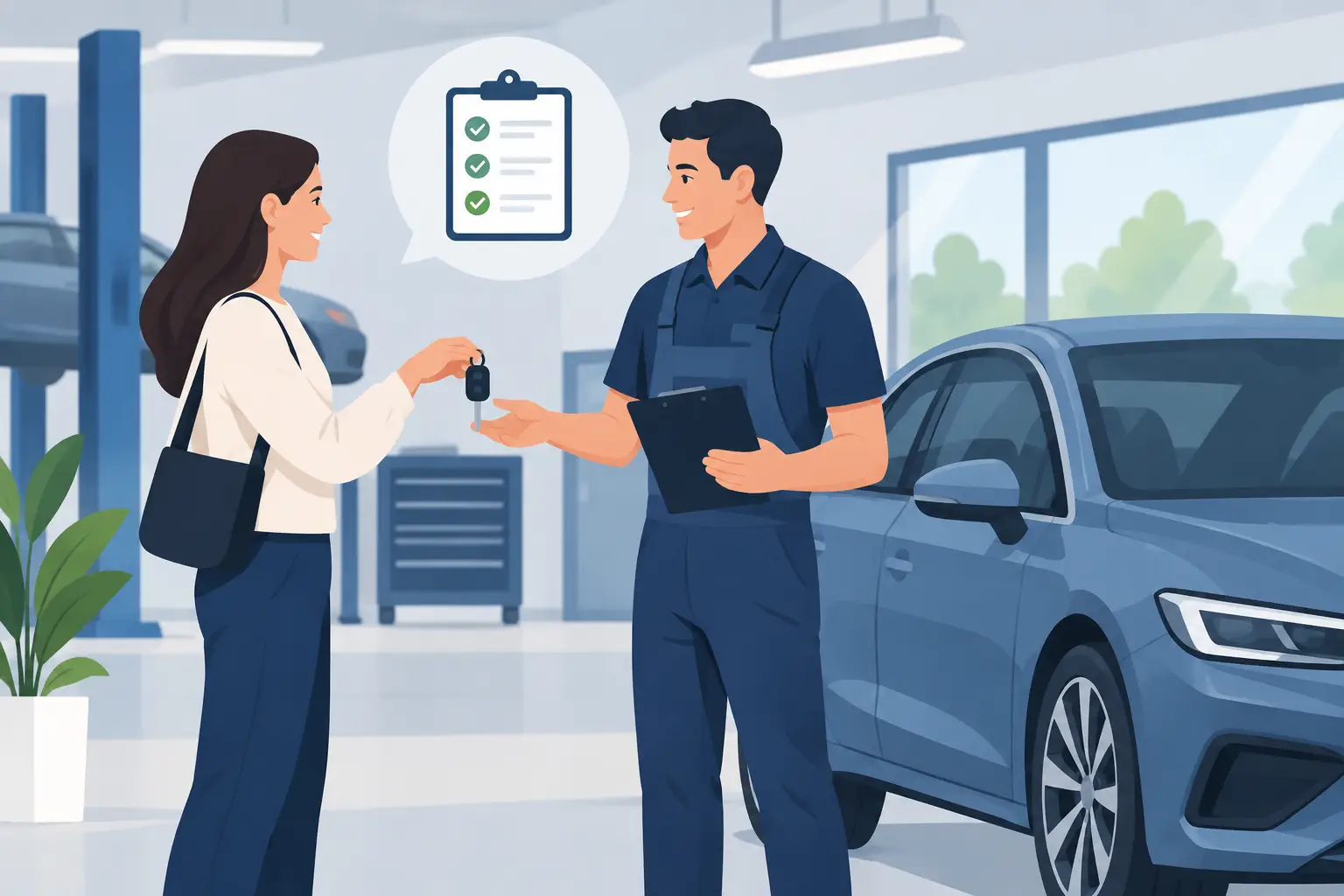
Your practical vehicle handover checklist
Use this checklist shortly before the keys change hands. Taking a few photos on your phone is often the quickest way to create a clear condition record.
- Check the exterior for existing scratches, dents, cracked lights or wheel damage. Photograph anything noticeable, including the number plate if it helps identify the vehicle in your images.
- Record the mileage, fuel level or battery percentage, and take a dashboard photo showing any warning lights already present.
- Note the make, model, registration and colour, then confirm where the keys, locking wheel nut key and relevant documents are located.
- Write down the work authorised, the symptoms reported and any concerns that need passing to the garage.
- Remove personal belongings, clear out rubbish and make sure the boot is accessible if the garage needs to inspect a tyre repair kit, charging cable or spare wheel.
- Confirm the collection contact, destination, return arrangements and the best number to call if approval is needed.
This may look detailed, but it should take no more than ten minutes once it becomes familiar. The key is consistency. The same simple checks are useful for a routine oil change and a more involved repair.
What to tell the garage
A vehicle can appear perfectly normal during a short drive and still have an intermittent fault. The more useful context you provide, the better the garage's chance of diagnosing it efficiently.
Explain when the issue happens. Does a noise appear only when turning left? Does a warning light come on after a longer journey? Has the car been difficult to start on cold mornings? Mention recent changes too, such as a new tyre, a battery replacement or work completed elsewhere.
It also helps to distinguish between what you know and what you suspect. You do not need technical language. Clear everyday descriptions are enough, and they prevent assumptions from becoming part of the job record.
If your vehicle has driving modes, an alarm, an immobiliser, a charging routine or a keyless entry quirk, tell the person handling the car. These details can save time at collection and avoid a confusing call when the vehicle arrives at the garage.
If someone else is collecting your car
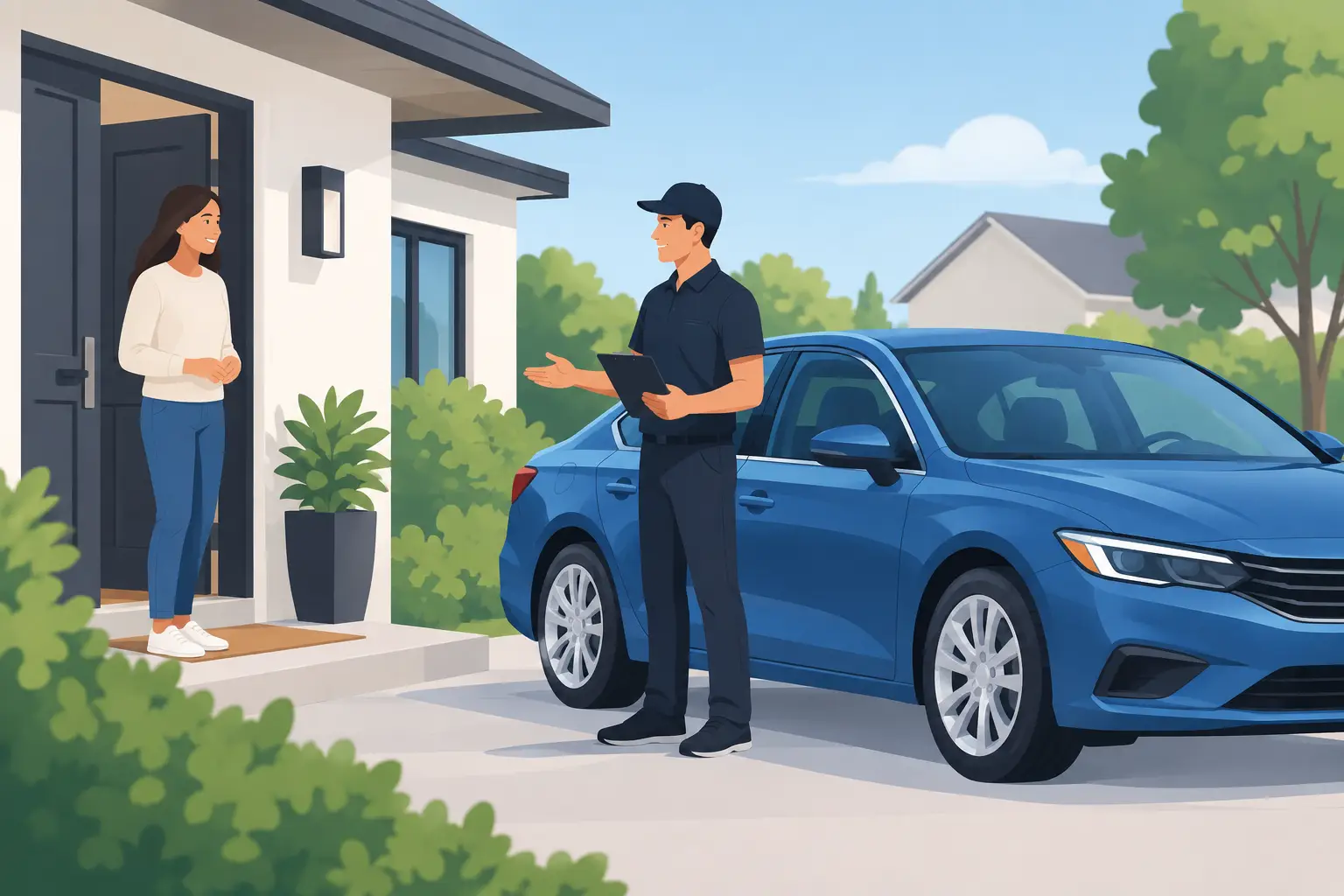
Using a collection and return service is designed to remove the disruption of a garage visit, not create another task to manage. The handover should therefore be clear, secure and easy to track.
Before collection, confirm the driver's identity through the agreed booking process. Be ready at the arranged time, or provide precise instructions if the vehicle is being collected from a permitted location without you present. Do not leave keys in an unsecured place unless that method has been expressly agreed as part of the service.
You should also know what condition information is being recorded and how you will be kept updated. SortMyCar provides insured, trackable collection and delivery, giving customers a practical way to keep a service or repair appointment moving without stepping away from work or family commitments.
There is a trade-off worth considering. A personal handover lets you describe a fault face to face, while collection saves time and travel. In many cases, you can get the best of both by sending a concise written note with the symptoms and being available by phone for the garage.
Check the car when it returns
A return handover deserves the same attention as collection, even if you are keen to get on with your evening. Check the mileage, fuel or charge level and exterior condition against your photos. Look inside for your belongings and make sure any documents, locking wheel nut key or charging cable are back where they belong.
Review the invoice or job sheet before filing it away. Confirm what work was completed, what parts were fitted and whether the garage has highlighted upcoming maintenance. If an advisory is unclear, ask for it in plain English and find out how urgent it is. Not every advisory requires immediate action, but it should not disappear into the glovebox unread.
Take a short drive when practical. Listen for the issue you reported and check that no new warning lights are showing. If something does not seem right, contact the garage promptly while the details of the work are still easy to trace.
A well-prepared handover gives you more than a tidy set of notes. It gives you back control of an appointment that would otherwise compete with the rest of your day. Keep the checklist on your phone, adapt it to your car and let the garage visit fit around life, rather than the other way round.