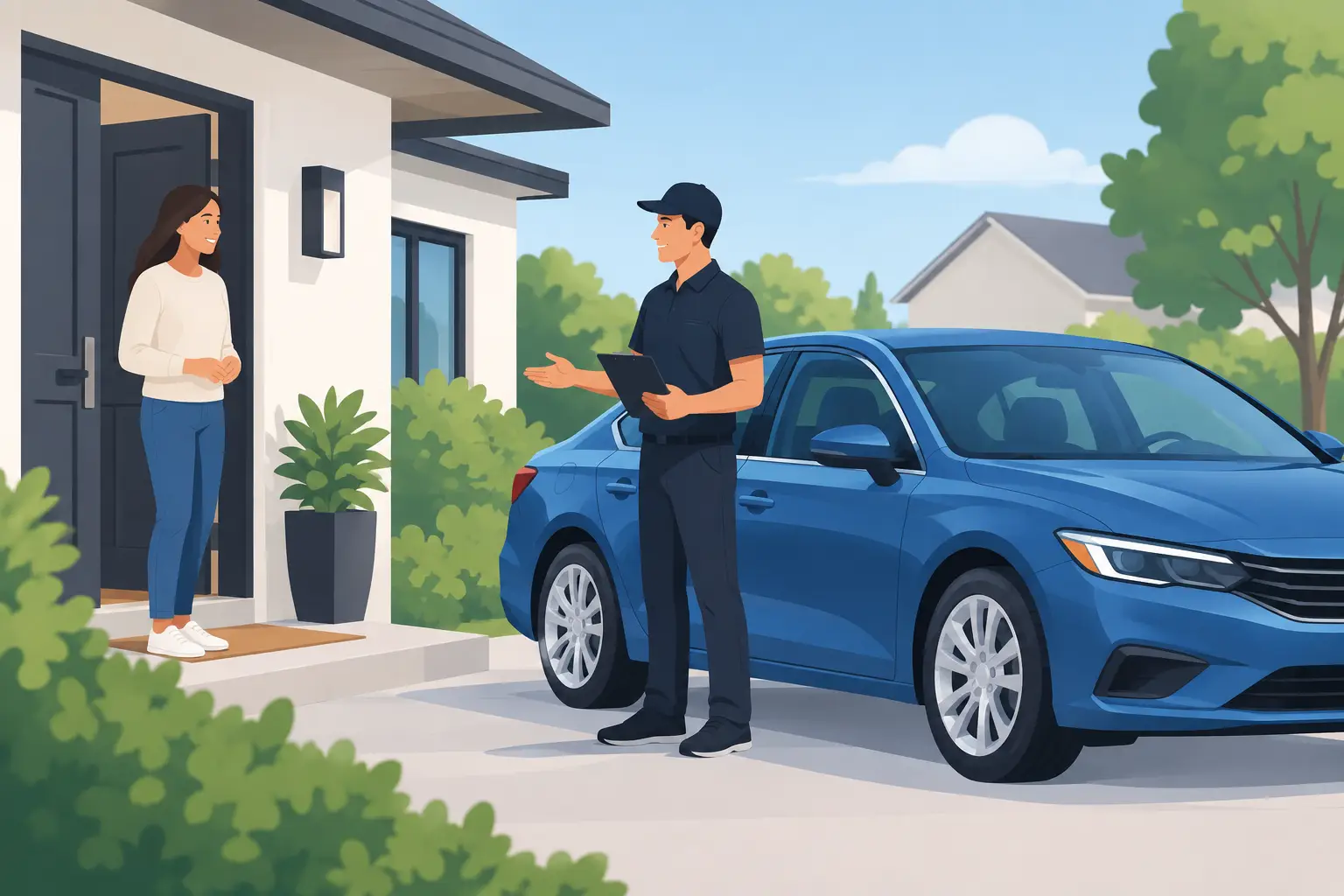

A garage appointment should not require a day of annual leave, a complicated lift arrangement or a scramble to collect the children. That is why more customers are asking how garages offer collection slots and what actually happens once their car leaves the driveway. The answer is usually simple: the garage builds collection and return into the booking journey, either with its own team or a trusted vehicle logistics partner.
For busy households, the value is not just avoiding a trip. It is being able to arrange servicing, repairs or an MOT around the rest of life, while knowing where the vehicle is and who is responsible for it.
What a garage collection slot really means
A collection slot is an agreed time window in which a driver collects your car from home, work or another suitable location and takes it to the garage or dealership. Once the work is finished, the vehicle can be returned in the same way.
It is different from a courtesy car and different from simply leaving your keys at reception. The collection is planned around your appointment, so the garage can receive the vehicle, carry out the booked work and keep you updated without requiring you to travel there yourself.
The exact arrangement varies. Some garages run a local collection service with their own staff. Others use specialist providers to manage collections and returns, particularly where customers live across a wider area or need more flexible time windows. A well-run service should make clear who is collecting the car, when they will arrive, what insurance applies and how you will receive updates.
How garages offer collection slots in practice
The process starts when you book the service, repair or MOT. Rather than selecting only a workshop time, you choose a collection option and provide the address, contact details and any useful access information. This might include a workplace car park, a gated development or a note that the key will be handed over in person.
The garage then matches the vehicle appointment with an available collection window. Morning slots tend to suit people who want their car collected before the working day begins; afternoon slots can work better when someone needs the car for the school run or an early appointment. Availability depends on driver capacity, distance, demand and the time needed for the garage to complete the work.
Before collection, the driver should confirm their identity and inspect the vehicle with you where possible. Existing marks or damage are recorded, mileage is noted, and the keys are handed over securely. This creates a clear record at the start of the journey and avoids uncertainty later.
After the handover, the car is driven to the garage for its booked work. If the repair needs authorisation, the garage contacts you as normal. Once the work is complete and payment is settled where required, a return slot is arranged. The vehicle is brought back, and you check it again on arrival.
This is a practical service, but it relies on clear communication. Collection windows should be realistic rather than overly precise promises that cannot account for traffic or an earlier handover taking longer than expected.
Collection slots are usually time windows, not exact minutes
A time window gives both the customer and the driver enough certainty to plan the day without creating a fragile schedule. For example, a collection between 8.00am and 10.00am may be more reliable than promising an arrival at exactly 8.37am.
That does not mean you should be left waiting without information. Good providers confirm the booking in advance and give meaningful updates on the day. If you are working from home, arranging childcare or planning to hand over the keys before a meeting, those updates matter.
Why customers choose collection instead of visiting the garage
For many people, getting to the garage is the hardest part of vehicle maintenance. You may need to take time away from work, arrange a lift back, use public transport or bring children along. The task itself may only take a few minutes, but the disruption can stretch across the day.
Collection slots remove that logistical problem. Your vehicle still receives the attention it needs, while you keep your routine moving. This can be particularly helpful for dual-income households, carers, parents with young children and people whose nearest suitable garage is not nearby.
There can also be a practical environmental benefit. A planned collection and return service can reduce unnecessary individual journeys to and from the workshop, especially where a customer would otherwise need someone else to follow them or collect them afterwards.
Convenience should never come at the expense of reassurance. Customers should expect a secure handover, appropriate insurance cover, a clear chain of responsibility and visibility of the process. Services such as SortMyCar are designed around these details, collecting and returning vehicles for garage and dealership appointments while helping customers keep track of the journey.
What to check before booking a collection slot
Not every garage offers the same arrangement, and the right choice depends on your location, vehicle and appointment type. A local independent garage may have limited collection days, while a larger dealership may offer wider coverage but longer booking lead times.
Ask whether the collection is included in the service price or charged separately. A paid option can still represent good value if it saves several hours of work time, taxi fares or the inconvenience of finding a lift. It is better to know the full cost before confirming the booking.
You should also check the collection area and the expected return timing. Some garages can return the car on the same day for straightforward servicing or MOT work. Others may need to keep it overnight if parts are required, diagnostics take longer or the workshop schedule changes. A reliable provider will not promise a same-day return until it is realistic.
Insurance is another sensible question. Confirm that the vehicle is covered while it is being collected, driven to the garage and returned. If your car has unusual requirements, such as a manual gearbox, a low ride height, a warning light or a fault that affects drivability, mention this when booking. It helps the garage plan the collection safely and decide whether a different arrangement is needed.
Making collection day straightforward
A little preparation makes the handover quicker. Keep the vehicle accessible, remove valuables and make sure the fuel level is sufficient for the planned journey. Have the keys, locking wheel nut key and any relevant service information ready if the garage has requested them.
If someone else is handing over the car, make sure they know the collection window and the agreed process. For workplace collections, check whether the driver needs visitor access, a registration number for parking or a call when they arrive. Small details prevent delays.
It is also worth being clear about how the garage should contact you during the day. If you are in meetings, a text message may be better than a phone call. If repair approval is likely, make sure the garage has the right number and that you can respond promptly. This keeps the work moving and gives you the best chance of receiving the vehicle back when expected.
A better fit for real schedules
Garage collection slots are not about making car maintenance feel complicated. They are about recognising that most people cannot easily pause work, family commitments and everyday plans for a workshop visit. When the service is properly managed, the handover is secure, the journey is accounted for and the garage appointment happens without taking over your day.
The next time your service, repair or MOT is due, ask about collection and return before assuming you need to make the journey yourself. A well-chosen slot can turn a frustrating errand into one less thing to organise.