
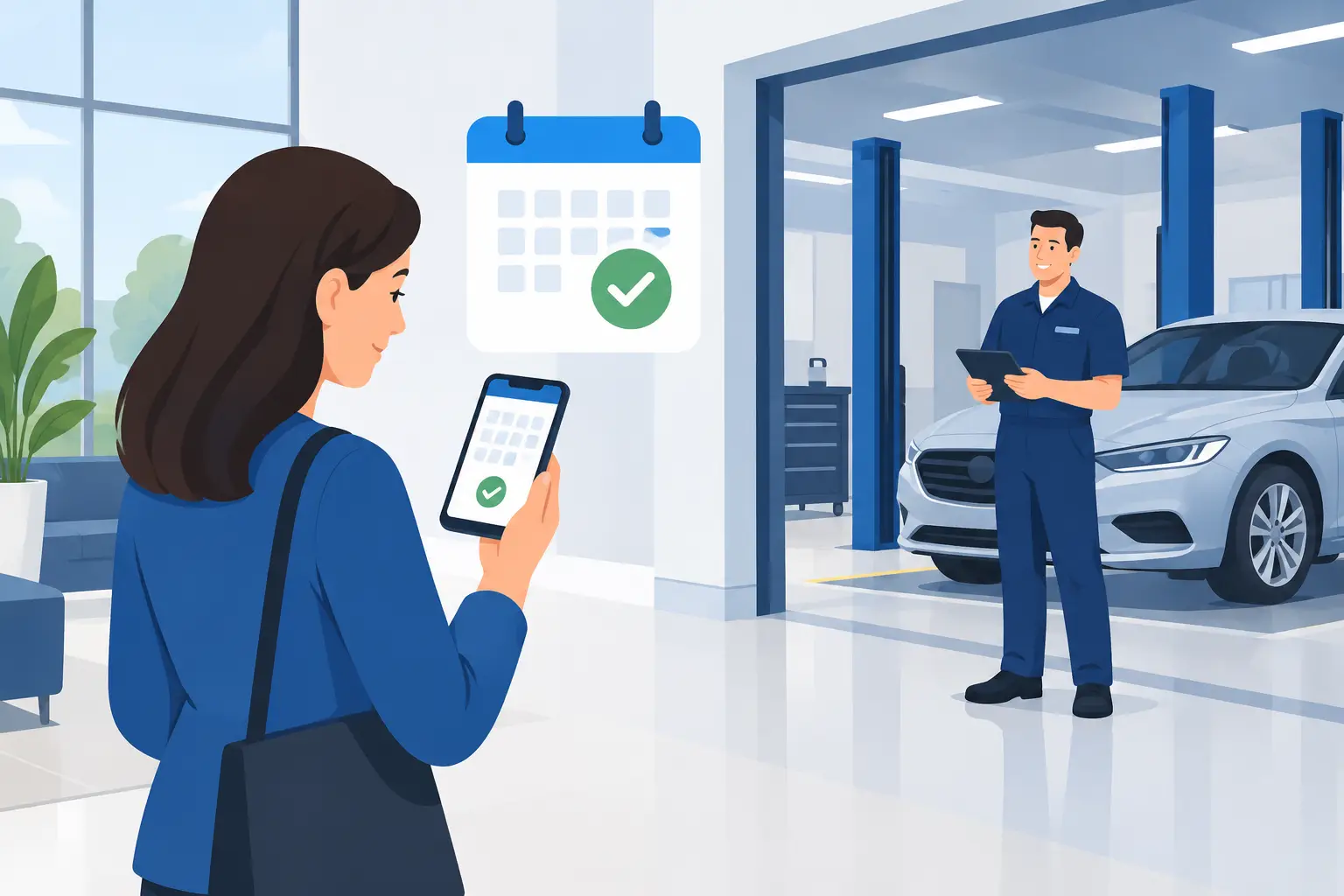
A missed service booking is rarely about a customer not caring about their car. More often, life simply gets in the way: a meeting runs over, childcare changes at short notice, or the thought of arranging lifts to and from the dealership becomes one task too many. Dealerships reduce service no-shows when they treat attendance as a convenience problem, not just a communication problem.
For customers, a service appointment can mean losing several hours of a working day. For dealerships, an empty workshop slot affects technician productivity, parts planning and revenue. The answer is not to send more generic reminders. It is to make keeping the booking genuinely easier than cancelling it.
Why service customers do not turn up
Most no-shows begin well before the appointment day. A customer may book while motivated by a warning light, an upcoming MOT or a service reminder, then realise later that the appointment clashes with everyday responsibilities. They may have no one to collect them, no practical public transport route, or simply no spare time to wait around.
This matters because a confirmed booking is not always a committed booking. If the process assumes that every customer can take time off work, arrange a lift and travel across town twice, the dealership has created friction that will eventually lead to missed appointments.
There are also smaller reasons customers fail to attend. They may be uncertain about drop-off times, unsure what work is being carried out, worried about cost, or embarrassed that they have forgotten to cancel. Clear, human communication helps with these concerns, but it cannot solve the biggest barrier: fitting the visit into a busy day.
How dealerships reduce service no-shows in practice
The most effective approach is to make the service journey feel managed from the moment a booking is made. Customers need clear information, timely choices and a practical route to getting their vehicle to the workshop.
Confirm the plan, not just the time
A booking confirmation should do more than repeat a date and time. It should confirm what the customer needs to do next, when their vehicle should be available, how long the work is likely to take and what transport options are available.
Simple language is best. Tell customers whether they need to bring locking wheel nut keys, any relevant service history, and what happens if additional work is identified. When people know what to expect, they are less likely to postpone the appointment because it feels unclear or inconvenient.
It is also worth asking one practical question during booking: how will you get the car to us? That question identifies potential no-shows early. A customer who hesitates may not need persuasion. They may need a better option.
Use reminders that give customers a way forward
A reminder sent the day before an appointment can reduce forgetfulness, but reminders work harder when they make action easy. Include the booking time, dealership contact details and a straightforward way to reschedule if necessary.
A sequence often works better than one message: an initial confirmation, a reminder a few days beforehand, and a final check-in the day before. The timing should reflect the type of work. A routine service may need a short reminder cycle, while a larger repair might benefit from earlier contact because customers may need more time to arrange their day.
Avoid messages that sound automated or accusatory. Customers are more likely to respond when they feel the dealership is trying to help them keep the booking, rather than chasing them for failing to attend.
Give customers a collection and return option
For many households, the journey to the dealership is the real obstacle. Collection and return changes the equation. Instead of asking someone to interrupt their working day, sort a lift, and make a second trip to collect their car, the appointment can fit around where they already are.
A secure, insured and trackable collection and delivery service can help dealerships offer that convenience without placing additional pressure on their own team. SortMyCar, for example, collects a customer's vehicle from home, work or another chosen location, takes it to the dealership or garage, and returns it once the work is complete.
This is particularly useful for customers with young children, demanding jobs, limited mobility or long commutes. It can also be the difference between a customer delaying essential work and getting it booked in promptly.
There is a trade-off. Not every appointment needs collection and return, and some customers will prefer to visit in person. The key is to offer it as a clear choice, especially for bookings where transport is likely to be a barrier. Convenience should feel available, not compulsory.
Make rescheduling easy and judgement-free
Some cancellations are unavoidable. A good rescheduling process protects the relationship and gives the dealership another chance to fill the slot.
If a customer cannot attend, they should be able to tell you quickly by phone, message or online. Give them alternative dates where possible, and make the language supportive. A customer who feels told off for cancelling may simply disappear. A customer who receives a simple replacement option is far more likely to rebook.
Dealership teams should also distinguish between a cancellation and a no-show. A cancellation with enough notice may allow the workshop to offer the slot to another customer. That data helps identify which communication timings and booking types need attention.
Make convenience part of the service proposition
Customers do not judge a dealership only on the quality of the repair. They remember how much effort it took to get the work done. A smooth collection, clear updates and a vehicle returned to the right place can make routine maintenance feel far less disruptive.
That experience is valuable for retention. When people know servicing will not cost them a day of annual leave or a complicated school-run arrangement, they are more likely to return to the same dealership. They are also more likely to book preventative work rather than waiting until a problem becomes urgent.
This is where service departments can stand apart from competitors. Price matters, but time and hassle matter too. For a busy customer, a slightly cheaper appointment that requires two difficult journeys may not be the better value option.
Track the reasons behind missed bookings
No-show reduction should be measured, not guessed. Record whether a missed appointment was caused by no response, transport difficulties, scheduling conflicts, cost concerns or a booking made too far in advance. Even a simple set of categories can reveal patterns.
Look at the times and days with the highest no-show rates. If early weekday bookings regularly fail, customers may be struggling to fit drop-off around commuting and school runs. If appointments booked several weeks ahead are missed more often, an earlier confirmation check may help.
It is equally useful to track the outcome of customers offered collection and return. Measure attendance, repeat bookings and feedback. The goal is not merely to fill more workshop slots this month. It is to build a service process that customers trust enough to use again.
Train teams to spot friction early
Front-of-house and booking teams are often best placed to prevent a no-show. They hear the hesitation in a customer's voice: ‘I will have to see if I can get away from work’ or ‘I need to ask someone for a lift’. Those are signals that the appointment is not yet secure.
Give teams permission to solve the practical problem. That may mean offering a different time, explaining collection and return, or arranging a reminder at a time that suits the customer. The conversation should remain simple and respectful. Customers do not need a sales pitch when they are trying to organise a busy week.
A good question is: ‘What would make this appointment easiest for you?’ It moves the conversation from diary administration to customer care.
A better appointment starts before the workshop
Reducing no-shows is not about pressuring customers to turn up. It is about recognising that vehicle servicing competes with work, family and everything else that fills a calendar. Clear communication, flexible rescheduling and practical vehicle collection can remove the reasons people put appointments off.
When a dealership makes the journey to and from the workshop as straightforward as the work itself, customers have one less reason to delay. That is better for workshop planning, better for long-term loyalty, and above all, better for people who need their car looked after without putting their life on hold.